The Restaurant That Changed My Mind About Niche MarketingLessons from a European rail journey (Part 6)
For years, I’ve held a fairly straightforward view about niche markets. The smaller the market, the harder it is to build a successful business.
That sounds obvious, but it’s surprising how often businesses ignore it. They become so focused on serving a particular audience that they forget to ask whether there are enough people in that audience to sustain them.
A conversation with a friend reinforced this thinking a while ago. He told me about a vegan restaurant near where we live that had closed. My immediate response was probably predictable.
“Why would you open a vegan-only restaurant?”
The number of vegans in the UK is relatively small. Even if every vegan customer became a regular visitor, it felt like a difficult proposition. Surely the better approach would be to offer a good range of thoughtfully designed vegan dishes alongside a broader menu. That way you serve everyone. You maximise your potential market. You don’t exclude customers before they’ve even looked at what you offer.
The logic seemed sound. Then I went to Ljubljana.
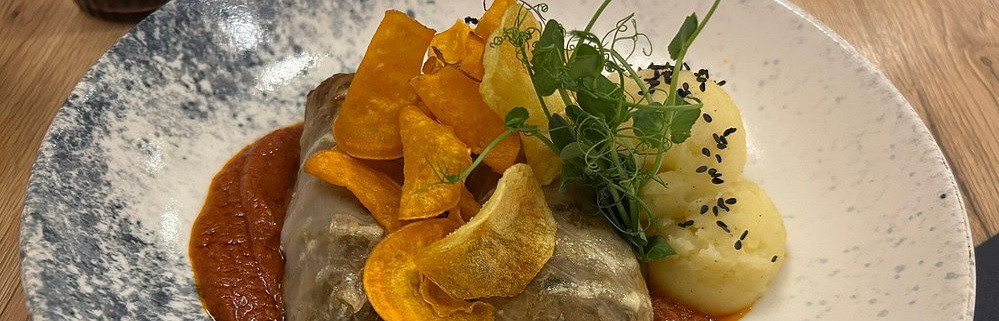
During our trip, my wife and I discovered a restaurant that happened to be entirely vegan. What struck me wasn’t that it was vegan. It was that I didn’t know it was vegan.
We chose it because the food looked interesting. The reviews were strong. The atmosphere appealed. The menu looked good. Only afterwards did it become obvious that everything on the menu was plant-based. More importantly, they didn’t seem particularly interested in telling us.
There were no large statements about philosophy. No attempt to define themselves by what they excluded. No sense that they were appealing only to a particular tribe. Instead, they positioned themselves around food and experience. And the food was exceptional. In fact, it was some of the tastiest food I’d eaten for quite some time.
Not some of the best vegan food. Some of the best food. That distinction matters, because it forced me to reconsider my original assumption. Perhaps the issue isn’t whether you serve a niche. Perhaps the issue is how you position yourself.
Many businesses fall into the trap of leading with what makes them different. They assume customers are interested in the category. In reality, customers are often interested in the outcome. Nobody sits down in a restaurant wanting to consume a dietary philosophy. They want an enjoyable meal.
The philosophy might matter to some customers. For many others, it doesn’t. The experience comes first. The same thing happens in B2B.
Nobody buys an engineered product because they want an engineered product. They buy it because they want the outcome it delivers. The manufacturer may be proud of the metallurgy, the tolerances achieved, the innovative design, or the years of development that went into it.
The customer is usually focused on something much simpler. They want improved productivity. They want lower operating costs. They want reduced downtime. They want greater reliability. They want increased throughput. They want to solve a problem or achieve a business objective.
The engineering matters enormously. It is often the reason the product succeeds. But from the customer’s perspective, it is the means rather than the end.
Yet many engineering businesses still market the product rather than the outcome. They talk about specifications, features and technical superiority, often assuming the customer shares their enthusiasm for the engineering itself.
Customers start with a problem. They care about the outcome. Only then do they become interested in how you deliver it. The restaurant in Ljubljana understood that instinctively. Its market wasn’t “vegans”. Its market was people who enjoy great food. Being vegan simply happened to be how it delivered that experience. That’s a very different strategy.
Of course, context matters. Ljubljana has a vibrant food scene, a significant student population and a concentration of visitors looking for new experiences. What works there may not work in every town or city. That’s exactly the point. Good strategy isn’t developed from assumptions. It’s built on an understanding of the market, its size, its characteristics and its needs.
The business question isn’t: How niche is my offer?
It’s: Is there enough of the right audience, in the right place, with the right motivations?
Those are very different questions.
Looking back, my original view wasn’t entirely wrong. A small market can absolutely limit growth. But I now think I was asking the wrong question. I was focused on what the restaurant was. The owners were focused on what people wanted to experience. In the end, that’s why the restaurant was full. And it’s why I would happily recommend it to anyone, regardless of what they choose to eat.
Sometimes the strongest positioning isn’t about telling people what you are. It’s about making that question irrelevant.